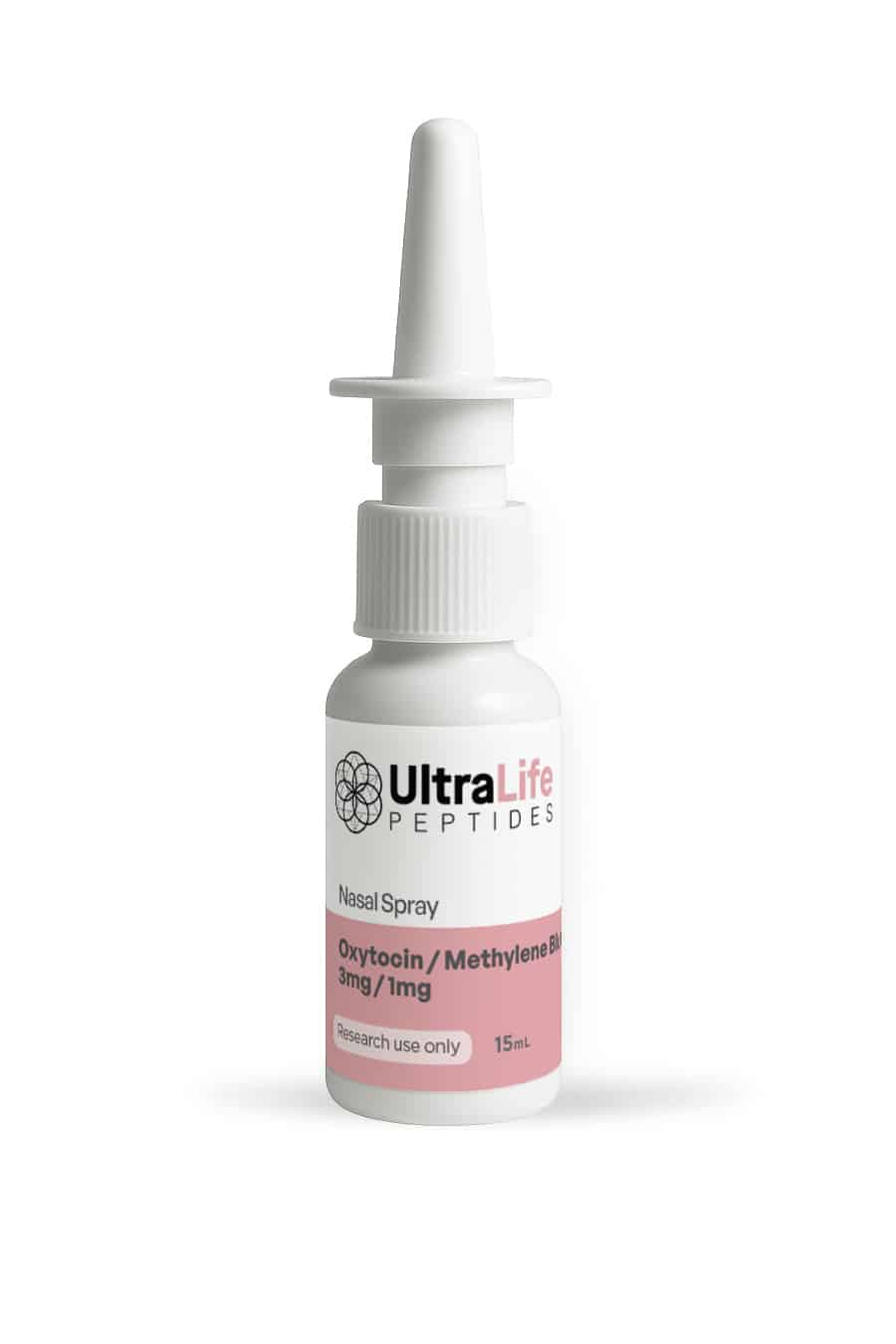
OXYTOCIN / METHYLENE BLUE – COMPREHENSIVE RESEARCH COMBINATION FOR NEUROCOGNITIVE, MITOCHONDRIAL, AND CELLULAR SIGNALING STUDIES
Scientific Overview of Oxytocin / Methylene Blue
Oxytocin and Methylene Blue are two well-characterized compounds that have been extensively investigated in neuroscience, mitochondrial biology, and cellular signaling research. This combination is formulated as a nasal spray for laboratory and research applications evaluating neuropeptide signaling, mitochondrial function, and cognitive-related pathways.
In in-vitro and in-vivo models, Oxytocin / Methylene Blue has been investigated for its effects on:
- Oxytocin Receptor Signaling– evaluation of oxytocin receptor activation and downstream pathways involved in social behavior, stress response, and neuroendocrine regulation (Meyer-Lindenberg et al., 2011)
- Mitochondrial Function and Cellular Bioenergetics– investigation of mitochondrial electron transport, ATP production, and oxidative metabolism associated with Methylene Blue (Rojas et al., 2012)
- Neurocognitive and Cellular Function– study of neuronal energy metabolism, cellular resilience, neurotransmission, and redox signaling in experimental models (Gonzalez-Lima & Auchter, 2015)
Oxytocin / Methylene Blue is widely utilized as a research combination for investigating neuropeptide signaling, mitochondrial bioenergetics, cognitive function, and cellular energy regulation.