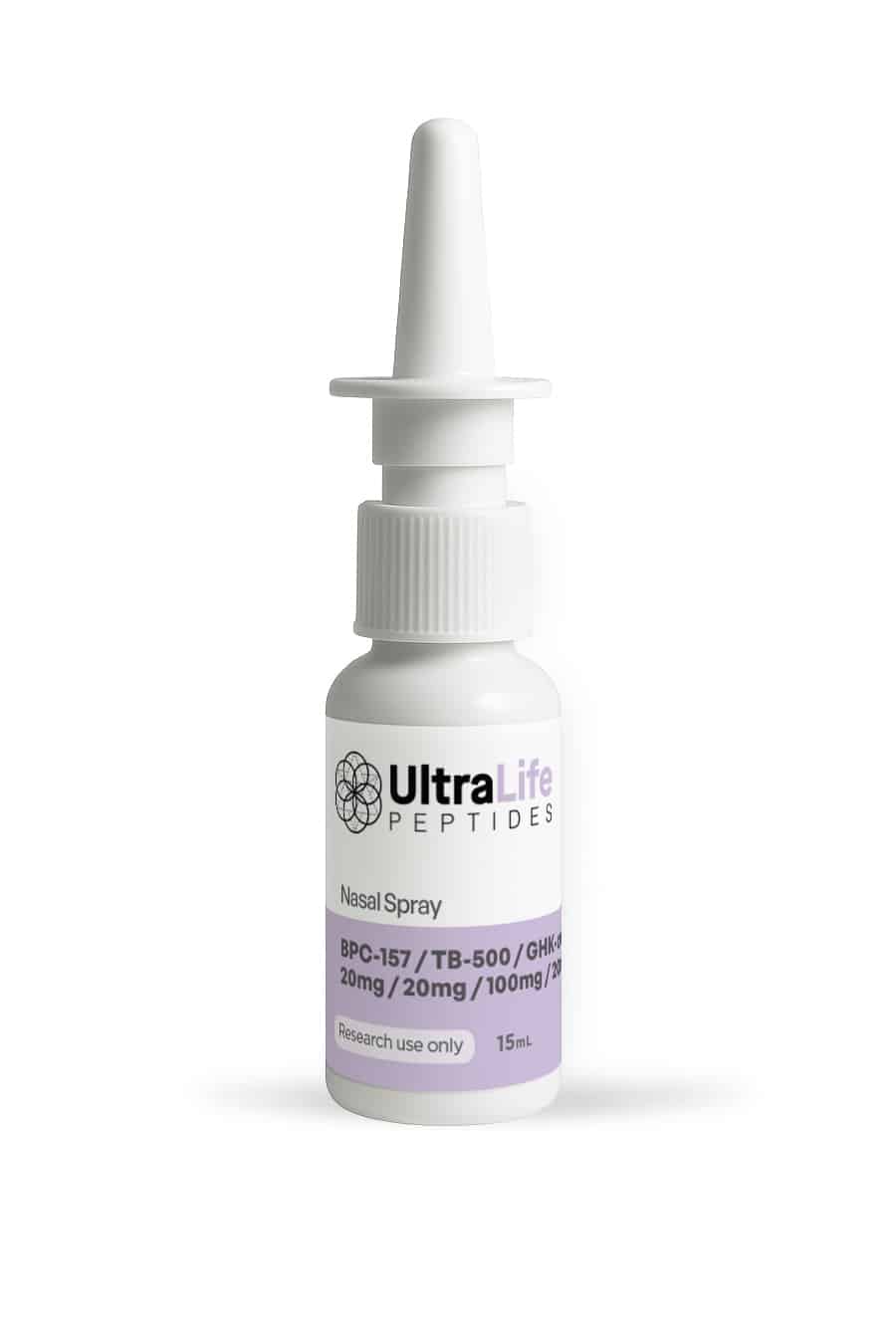
BPC-157 / TB-500 / GHK-CU / KPV – COMPREHENSIVE RESEARCH PEPTIDE COMBINATION FOR TISSUE REPAIR, INFLAMMATORY SIGNALING, AND CELLULAR REGENERATION STUDIES
Scientific Overview of BPC-157 / TB-500 / GHK-Cu / KPV
BPC-157, TB-500, GHK-Cu, and KPV are extensively studied research peptides that target complementary pathways involved in tissue repair, extracellular matrix remodeling, inflammatory signaling, angiogenesis, and cellular regeneration. This multi-peptide nasal spray formulation is designed for laboratory and research applications investigating coordinated healing and regenerative mechanisms.
In in-vitro and in-vivo models, this peptide combination has been investigated for its effects on:
- Tissue Repair and Regeneration– evaluation of fibroblast migration, collagen synthesis, extracellular matrix remodeling, and cellular repair mechanisms following experimental injury (Sikiric et al., 2018; Pickart & Margolina, 2018)
- Angiogenesis and Connective Tissue Biology– investigation of vascular endothelial growth factor (VEGF) signaling, blood vessel formation, tendon repair, and connective tissue regeneration (Goldstein et al., 2005)
- Inflammatory and Immune Signaling– study of cytokine modulation, inflammatory pathway regulation, epithelial repair, and immune homeostasis associated with KPV and related peptide signaling (Ceriani et al., 1994)
BPC-157 / TB-500 / GHK-Cu / KPV is widely utilized as a research peptide combination for investigating tissue regeneration, wound healing, extracellular matrix biology, angiogenesis, inflammatory modulation, and mechanisms involved in cellular recovery.